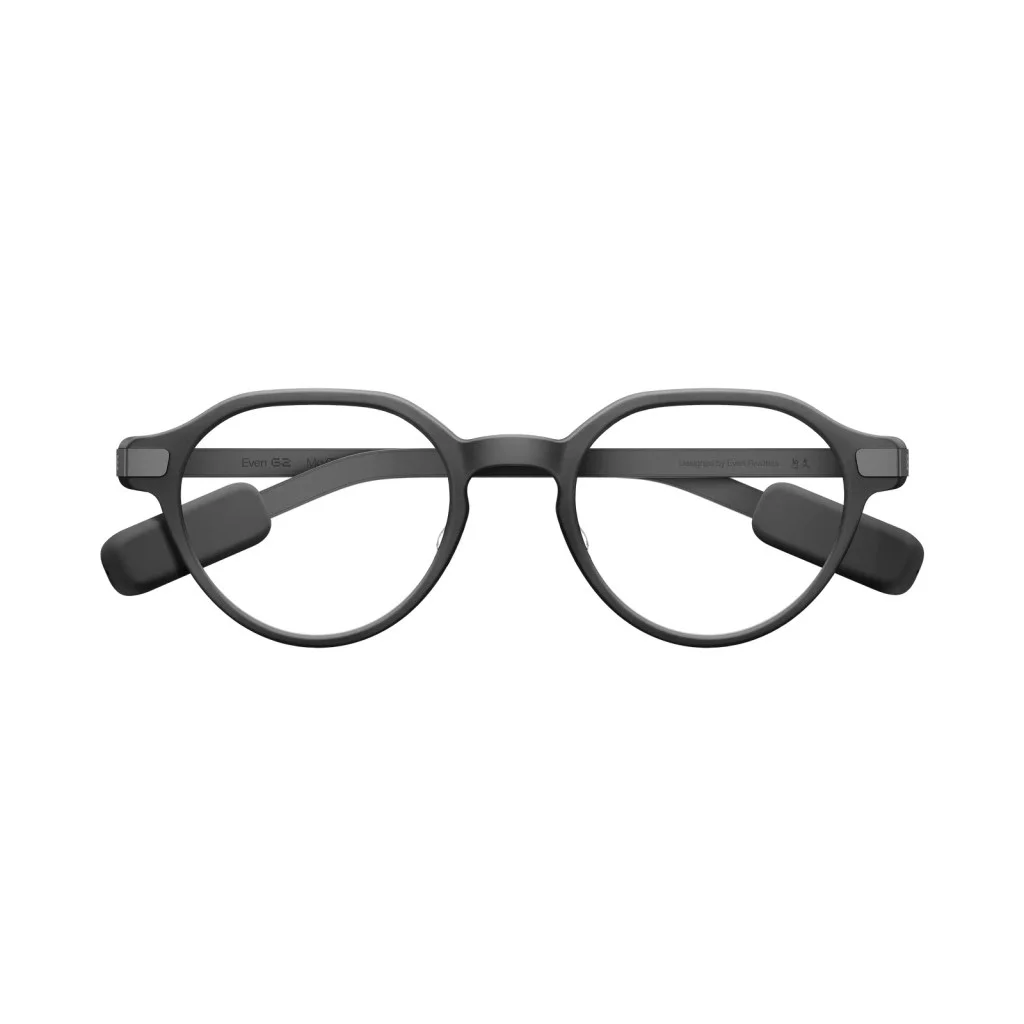
Even Realities’ G2 smart glasses prove you don’t need a camera to be useful. These sleek, 35-gram frames project a neon-style heads-up display for schedules, translations, and navigation—all while keeping the people around you off-camera.
What makes the Even Realities G2 different
Unlike Meta’s camera-equipped Ray-Bans or other smart glasses racing toward color screens, the G2 focuses on productivity. It uses a monochrome green display (think retro arcade sign) to show text and info, with no cameras or speakers by design. That means no recording, just real-time assistance for meetings, travel, or language barriers.
The G2 improves on its predecessor with a brighter 1,200-nit display (up from 1,000 nits), a 75% larger screen area, and a smoother 60Hz refresh rate (vs. 20Hz on the G1). It also packs four microphones (double the G1’s count) for better voice commands. The magnesium alloy frame and titanium temples keep it light and durable, with UV-protective lenses for outdoor use.
Battery, controls, and real-world use
Even claims the G2 lasts up to two days on a single charge, with a carrying case that recharges the glasses seven times before needing a plug. In practice, the battery outlasted daily use, though the case itself is bulky—too big for a pocket. Controls are built into the temples: tap to wake, double-tap for a dashboard of meetings or news, or long-press for a menu with translation, navigation, and AI features.
Translation is a standout. Set a target language, and the G2 lets you converse in real time—handy for multilingual meetings or travel. (The catch: the other person won’t see your translations unless they’re also using the app.) Navigation shows turn-by-turn directions on the display, but it’s limited to Even’s own app, not Google or Apple Maps. Early tests had address accuracy issues, though cyclists or motorbike riders might still find it useful once refined.
Even AI and the R1 ring: helpful but imperfect
The built-in Even AI assistant handles questions and to-do lists, but it often misheard commands outdoors or delivered overly long answers with no way to skip ahead. The optional $249 R1 ring adds touch controls and health tracking (heart rate, steps, sleep), but it’s hard to justify when the glasses’ own controls work fine—and dedicated fitness rings like Oura do health better.
At $599, the G2 offers solid hardware and a privacy-first approach. Yet its everyday use case is still niche: ideal for frequent travelers, presenters, or multilingual professionals, but less essential for casual users. Even’s bet on productivity over recording is bold, but to make these glasses a daily must-have, the company needs stronger first-party software—especially now that it’s reached unicorn status.


