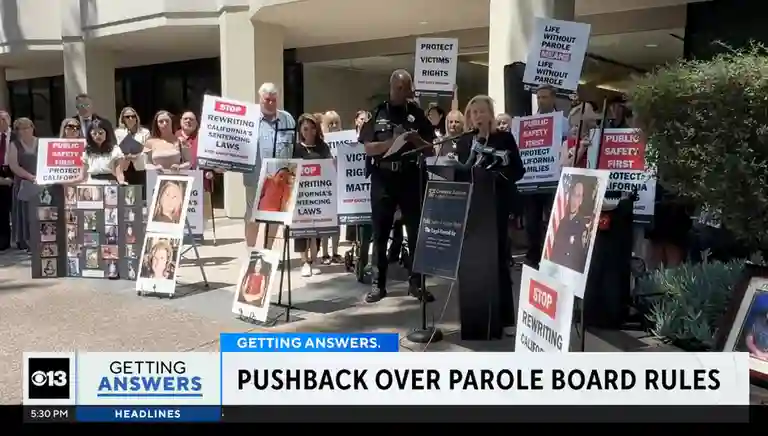
A lawsuit has been filed in California challenging new parole board regulations that critics say could allow some of the state’s most violent criminals to seek early release. The legal action, brought by victims’ families and public safety advocates, targets rules adopted on July 9 that take effect in October.
For context, the regulations create a process for inmates who have served at least 25 years to pursue sentence recalls through courts or gubernatorial commutation, potentially affecting thousands, including those convicted of murdering peace officers or children.
Victims’ families and advocates lead legal challenge
The Criminal Justice Legal Foundation, led by former Sacramento County District Attorney Anne Marie Schubert, argues the rules violate state procedural law and Marsy’s Law, a 2008 voter-approved measure expanding victims’ rights. Schubert stated at a press conference: “Life without the possibility of parole should mean exactly that.”
Among the plaintiffs are relatives of murder victims, including Angela Chavez, aunt of Sandra Cantu, an 8-year-old killed in 2009 by Melissa Huckaby, who received a life sentence without parole. Chavez said, “Our family has been sentenced to a lifetime without her.”
State defends regulations amid controversy
The California Department of Corrections and Rehabilitation maintains the rules do not guarantee release, as final decisions rest with courts or the governor. A spokesperson clarified: “These regulations do not release anyone from prison.”
Gov. Gavin Newsom’s office also opposed the lawsuit, asserting existing state law already permits the parole board to recommend resentencing or clemency. The board’s decisions have faced scrutiny this year, particularly over the release of child predators through the elderly parole program. Democratic lawmakers in May supported Newsom’s reappointment of five board members.
The lawsuit’s next steps remain pending, with the state department overseeing the parole board declining to comment on the active legal challenge.