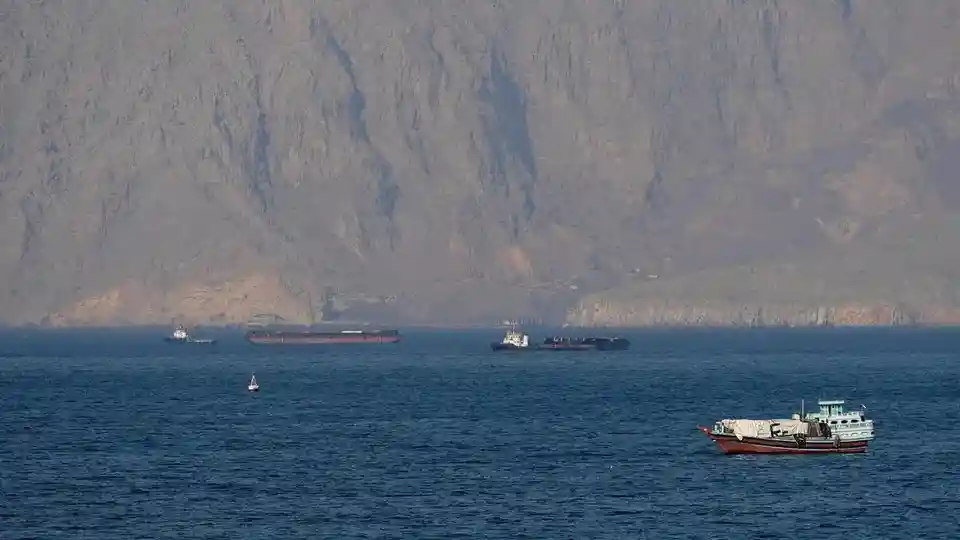
Iranian cruise missiles struck two UAE-flagged tankers in the Strait of Hormuz on Tuesday, killing one Indian crew member and injuring eight others, marking a sharp escalation in West Asia’s maritime conflict with direct implications for global shipping routes and insurance costs.
UAE tankers targeted amid rising Strait of Hormuz tensions
The UAE Ministry of Defence confirmed that the Mombasa and Al Bahiyah tankers were hit while transiting Omani territorial waters in the southern lane of the Strait of Hormuz. The attack triggered fires on both vessels, causing material damage that crews later contained. One Indian national aboard the Mombasa died, while the injured—six Indians and two Ukrainians—include four in serious condition.
The UAE condemned the strike as a “serious violation of international law” and reserved the right to respond, emphasizing its forces remain at “the highest level of readiness.” The incident follows U.S. airstrikes on Iran earlier the same day, after Washington announced a reinstated blockade of the Strait and proposed charging ships for safe passage. Iran retaliated with attacks on Bahrain, Jordan, and the UAE-linked tankers.
Human and economic toll on Indian seafarers
The Indian Embassy in the UAE mourned the “tragic loss” and pledged support for the injured and their families. This latest casualty brings the death toll for Indian nationals in the West Asia conflict to 11, with multiple seafarers rescued from prior attacks. Last month, three Indian sailors died in a U.S. strike on the Palau-flagged MT Settebello.
For investors and logistics firms, the strikes underscore the growing risk premium for vessels transiting the Strait of Hormuz—a chokepoint for roughly 20% of global oil supply. With insurance rates and rerouting costs likely to rise, the incident reinforces the need for contingency planning in energy and shipping markets.


