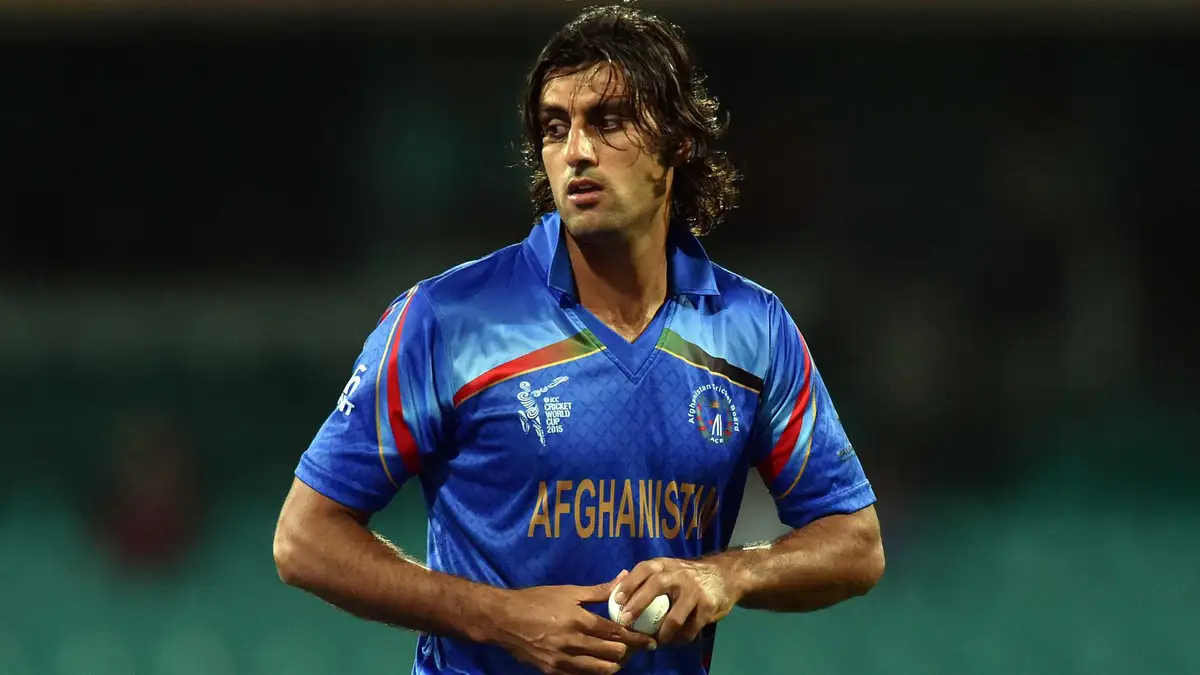
Shapoor Zadran, Afghanistan’s fiery left-arm pacer and a pioneer of the nation’s cricket revolution, has passed away after a courageous fight against cancer. The 38-year-old, buried with full state honours in Kabul, leaves behind a legacy as the Wasim Akram of Afghanistan and a hero to generations of cricketers.
Shapoor Zadran: The fighter who defied the odds
Even in his final months, Zadran’s passion for cricket never wavered. Confined to a zero-infection hospital room in India, he insisted on staying awake for the IPL window, analyzing Punjab Kings’ lineup and demanding why Azmatullah Omarzai wasn’t playing. “Why are Punjab Kings and Ricky Ponting not playing Azmat?” he’d lament, convinced the all-rounder—now ICC’s No.6—was superior to Marcus Stoinis.
His spirit never broke. Despite his immune system collapsing—white blood cell counts plummeting to 1,000-2,000 and platelets as low as 10,000—Zadran hid his pain, even resuming light training. Doctors marveled at his resilience. Asghar Afghan, his closest friend, recalled: “He was a fighter. The country always came first.”
A legend’s unforgettable moments
Zadran’s career spanned 11 years (2009-2020), with 44 ODIs and 36 T20Is for Afghanistan. But his most iconic moment came with the bat: an unbeaten 21-run last-wicket stand with Hamid Hassan to seal Afghanistan’s first-ever World Cup win (vs Scotland, 2015), capped by the winning boundary in the final over. Earlier, he’d taken 4 wickets in the same match.
- First Afghan player in an overseas league (Bangladesh)
- 44 ODIs, 36 T20Is for Afghanistan
- Shared 36 ODIs and 26 T20Is with Asghar Afghan
Kabul’s emotional farewell to a hero
Zadran’s body arrived in Kabul on July 8, greeted by teammates like Rashid Khan, Mohammad Nabi, and Asghar Afghan, along with senior government officials. Thousands lined the streets as his cortege passed, with verses from the Quran recited through the night. His funeral on July 9 drew nearly one lakh people, and he was laid to rest near Maranjan Hill—where Afghan kings are buried—a testament to his stature.
His father’s plea to rename Kabul’s cricket ground after him echoed the nation’s grief. As Amin Khatir, a close associate, remembered: “He always longed to return to Kabul. His wish is now fulfilled.”