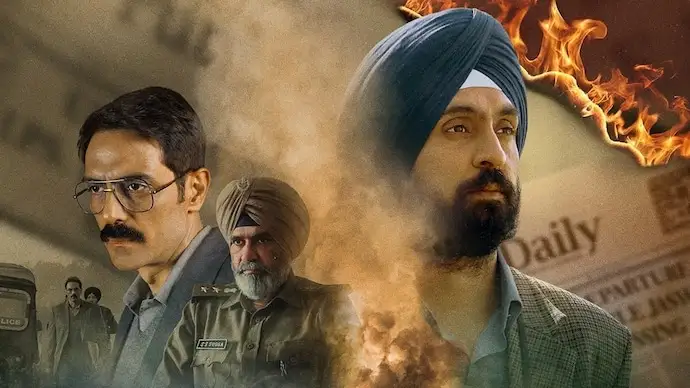
The Akal Takht Jathedar, Giani Kuldeep Singh, has condemned the blocking of the film Satluj, which is based on the life of human rights activist Jaswant Singh Khalra, and urged the Central government to allow its screening. The film was removed from the ZEE5 platform just two days after its release on July 3.
Background on Satluj and Jaswant Singh Khalra
Satluj, earlier titled Punjab '95, is set in Punjab during the 1990s and follows Khalra's work in investigating the cremation of thousands of unidentified bodies in the state between 1984 and 1994. Khalra, who disappeared in 1995, was a prominent human rights activist who exposed extra-judicial killings and fake police encounters during that period.
Giani Kuldeep Singh stated that preventing the truth about the atrocities against the Sikh minority from reaching people across the country and the world is an unconstitutional and unjust act. He emphasized that when films depicting atrocities against various communities can be freely screened, it is inappropriate to suppress a film highlighting the persecution of the Sikh minority.
Demand for Justice and Screening of Satluj
The Jathedar demanded that the government display statesmanship by allowing the truth uncovered by Khalra to reach the people and permitting the screening of Satluj. He also asked the government to take a sincere and serious approach in dealing with cases related to the killings of Sikhs and fake police encounters during the decade after June 1984.
The controversy over Satluj has brought focus back on Khalra's work and the demand for justice for the Sikh community. In 2005, four Punjab Police personnel were convicted for Khalra's abduction and murder, and their sentence was later enhanced to life imprisonment by the Punjab and Haryana High Court.
- Satluj was released on ZEE5 on July 3 and removed on July 5.
- Jaswant Singh Khalra disappeared in 1995 while investigating unidentified cremations.
- Four Punjab Police personnel were convicted for Khalra's abduction and murder in 2005.
The Akal Takht Jathedar's statement is likely to keep the debate around Satluj and Khalra's work alive, with the Sikh community continuing to demand justice and the screening of the film.