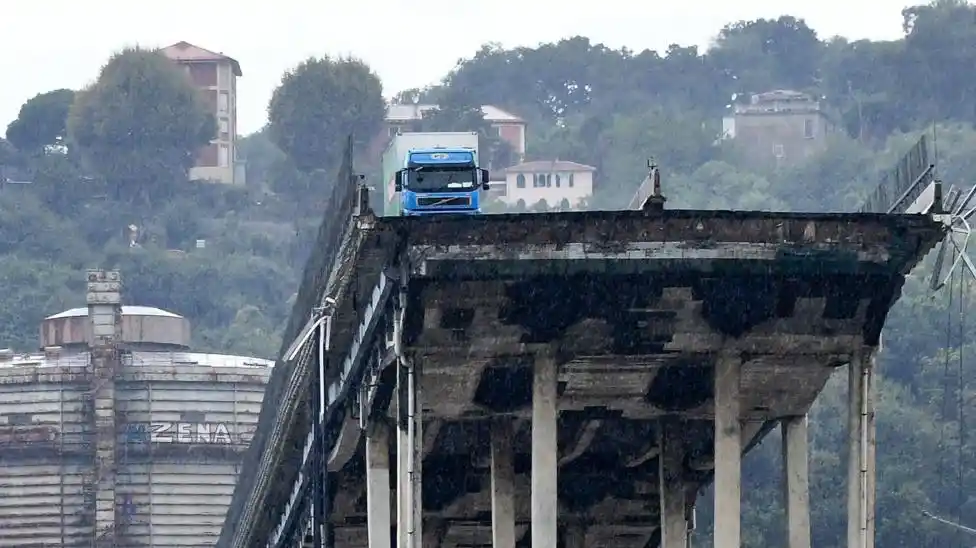
A Genoa court will deliver its first-instance verdict on Thursday in the trial over the 2018 Morandi bridge collapse, which killed 43 people, including Claudia Possetti, 47, her husband, and their two children. The disaster occurred during a summer storm on 14 August 2018, sending vehicles plunging onto railway tracks below.
Nearly eight years of legal proceedings
Egle Possetti, sister of victim Claudia Possetti, and the children’s surviving father are among relatives attending the verdict. "After so many years, so many hearings, we may be able to see some light," Egle told the BBC, expressing hope for accountability.
The trial, ongoing since July 2022, involves 57 defendants, including former executives of toll road operator Autostrade per l’Italia, its parent company Atlantia, engineers from maintenance firm Spea, and ex-transport ministry officials. Charges range from multiple manslaughter to document falsification.
Dispute over the cause of the collapse
Prosecutors argue delayed maintenance and ignored warnings contributed to the failure of the 1960s-built viaduct, a key route to the French border. Defense lawyers counter that a design flaw in a specific cable—encased in concrete—made the collapse unavoidable.
Some lesser charges, such as document forgery, have already lapsed under Italy’s statute of limitations. The trial has spanned 284 hearings, with former prosecutor Francesco Pinto noting that appeals and a Supreme Court ruling could extend the process by another two and a half years.
Broader implications for Italy’s infrastructure
The disaster reignited debates over Italy’s aging infrastructure and maintenance failures. Families of the victims seek clarity on responsibility. Egle Possetti, representing the victims’ families committee, stated that a verdict assigning blame could provide "some sort of peace and a sense of justice."
Autostrade per l’Italia issued its first apology for the disaster in an open letter this week, calling the lack of an earlier apology a "further, incomprehensible wound." The company and Spea are no longer criminal defendants after agreeing to pay around €30m in damages.
The original viaduct was demolished in 2019, and a new bridge, the Genoa San Giorgio, opened in August 2020. The victims’ families committee plans a press conference in Genoa on Thursday evening after the verdict.