India will allow private companies to manufacture missiles, a sector long dominated by state-run firms, to meet growing demand from its armed forces and allied nations. The Defence Ministry is set to issue a Request for Proposal (RFP) for the production of the Astra Mark 2 beyond-visual-range air-to-air missile.
Private Firms to Produce Astra Mark 2
Companies including ICOMM, Adani, Bharat Forge, Tata Group, and Mahindra Group are expected to bid for the contract. The Astra Mark 2, developed by DRDO, has a strike range of 180-200 km and is designed to counter China’s PL-15E missile, supplied to Pakistan ahead of Operation Sindoor.
The missile will be integrated with Tejas Mark 1-A, MiG-29, Su-30 MKI, and Rafale Marine fighter aircraft. State-owned Bharat Dynamics Ltd currently cannot meet the rising demand for such systems.
Expansion to Other Missile Systems
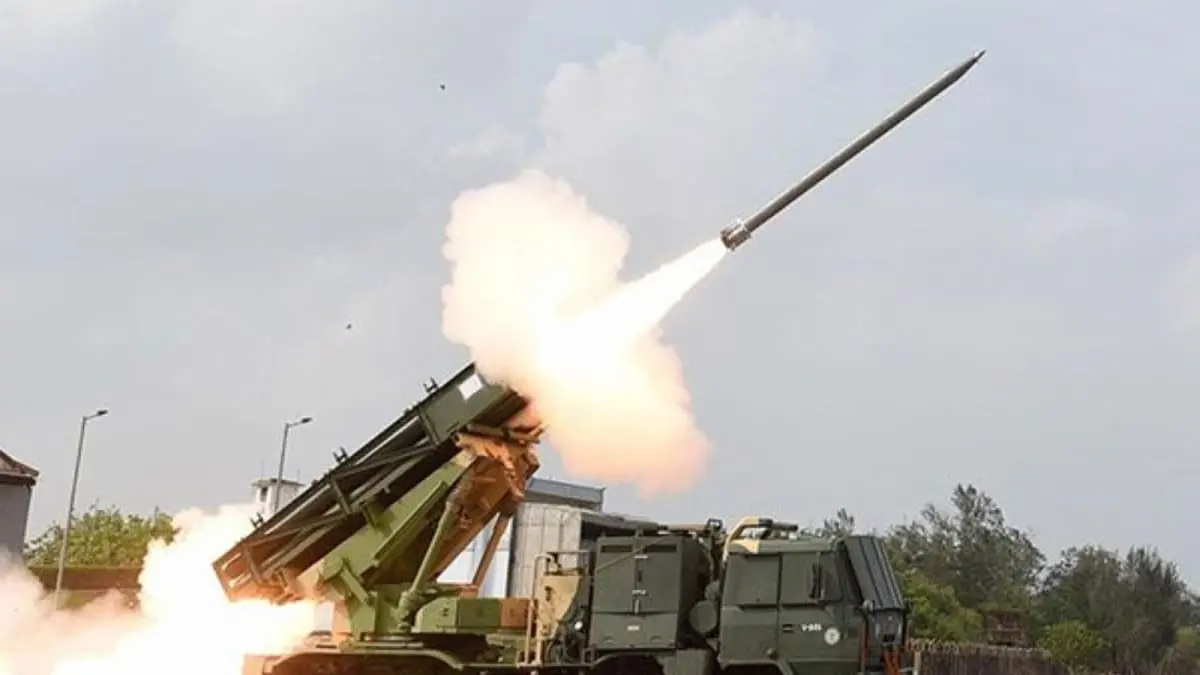
The Pralay tactical ballistic missile, with a 500 km range and hypersonic speed, is next in line for private sector involvement. It is part of India’s Integrated Rocket Forces, alongside the LRLACM, next-gen BrahMos, and extended-range Pinaka system.
Operation Sindoor underscored the need for stand-off weapons, prompting the government to accelerate missile and rocket arsenal development for deterrence against adversaries.
Strengthening Air Defence Capabilities
India is also bolstering its air defence network, including a joint long-range surface-to-air missile project with Israel for naval protection. A multi-layered anti-missile and anti-drone system is under development to counter threats from Turkish drones and Chinese rockets.
The fifth S-400 air defence system is expected in November, with plans to procure five more from Russia. These systems will be protected by Russia’s Pantsir air defence against drone and rocket attacks.