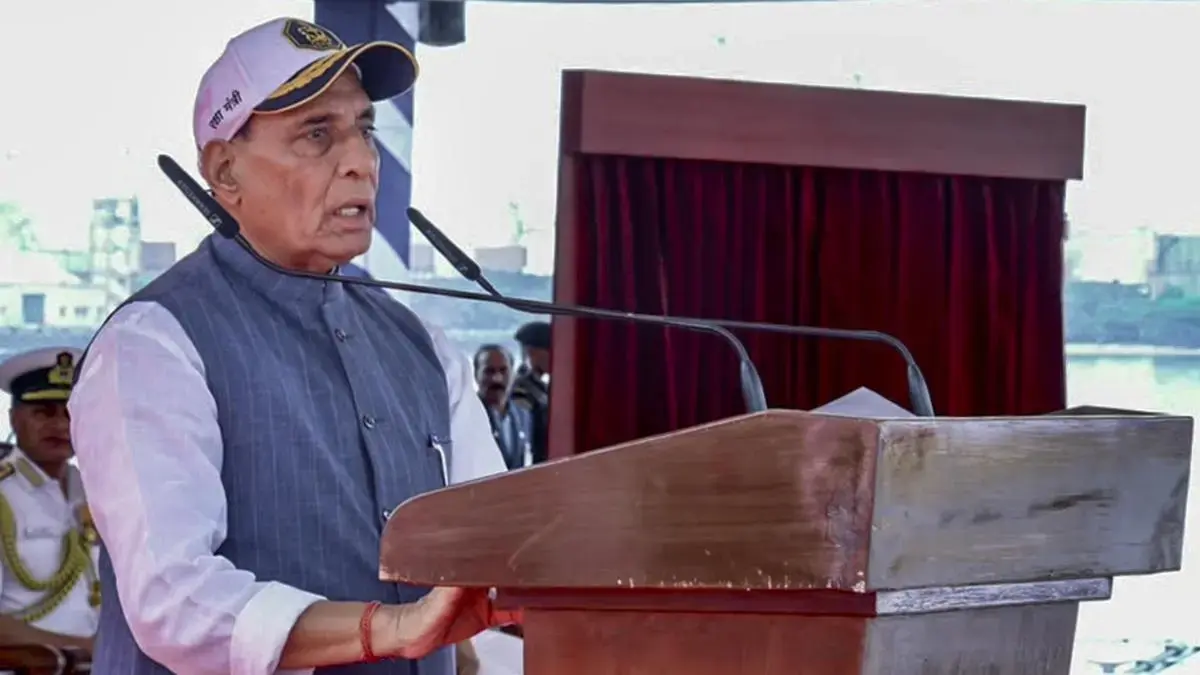
The Indian Navy protected ₹9,000 crore worth of cargo during the West Asia crisis, underscoring its role as a guardian of India’s economic stability. Defence Minister Rajnath Singh highlighted the Navy’s success in escorting 18 merchant vessels under Operation Urja Suraksha, securing critical trade routes.
Indian Navy’s Economic Shield in West Asia
Speaking at the commissioning of INS Mahendragiri, Singh emphasized the Navy’s dual role as a combat force and an economic protector. The operation ensured the safe passage of 19 cargo vessels, reinforcing India’s maritime resilience amid regional instability. This intervention directly mitigated potential supply chain disruptions, a critical concern for businesses reliant on West Asian trade.
INS Mahendragiri: A Boost to Indigenous Defence Capabilities
INS Mahendragiri, the sixth Project 17A stealth frigate, was commissioned into the Eastern Fleet, marking a milestone in India’s self-reliance in shipbuilding. Designed by the Navy’s Warship Design Bureau and built by Mazagon Dock Shipbuilders Ltd (MDL), the vessel is equipped for:
- Fleet air defence and anti-surface warfare
- Anti-submarine operations and maritime interdiction
- Surveillance and humanitarian assistance
- BrahMos missile capability, one of the world’s fastest cruise missiles
- Advanced radar and surface-to-air missile systems
India’s Growing Role as an Indo-Pacific Security Provider
Singh reiterated India’s position as a “net security provider” in the Indo-Pacific, a region under global scrutiny. The rapid induction of six Project 17A frigates in 1.5 years—including INS Nilgiri, Udaygiri, and Himgiri—demonstrates the Navy’s expanding operational reach. This capability not only deters threats but also strengthens investor confidence in India’s maritime trade corridors.
The commissioning of INS Mahendragiri signals a strategic shift: a Navy that secures both borders and economic interests, a critical factor for businesses and investors monitoring Indo-Pacific stability.


