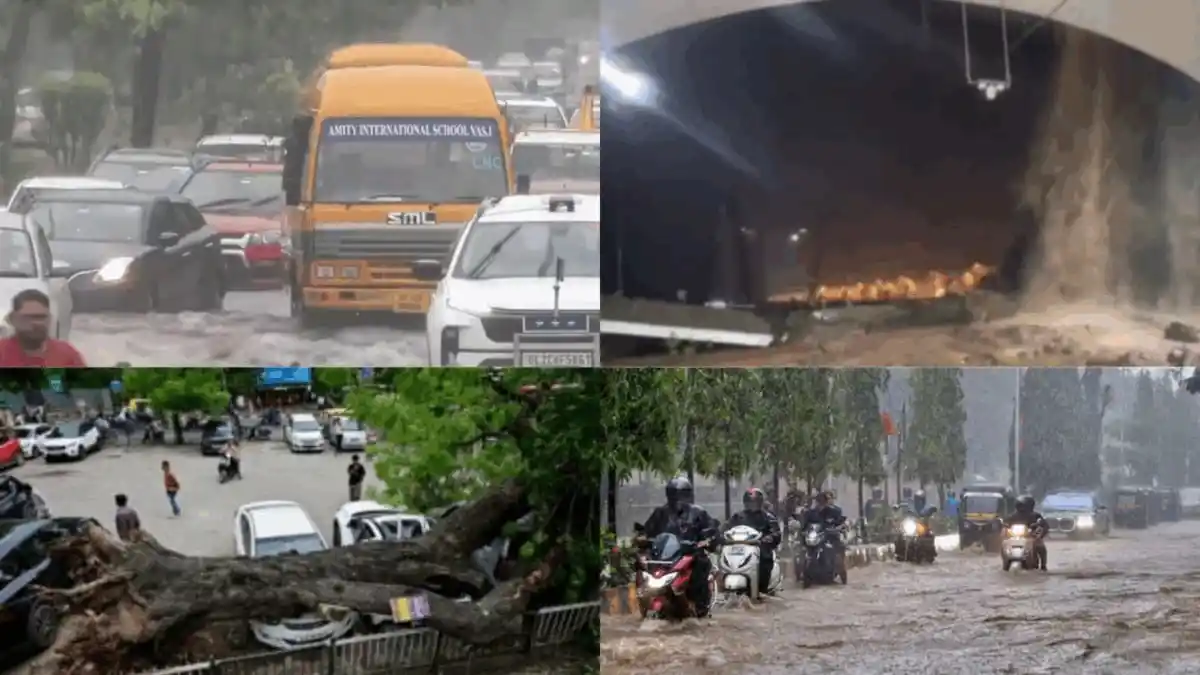
Heavy monsoon rains have devastated parts of India, causing deadly floods, landslides, and building collapses across multiple states, including Delhi, Maharashtra, Kerala, and Uttarakhand. Union Home Minister Amit Shah held emergency talks with chief ministers of affected regions on July 9–10, 2026, as rescue teams worked to evacuate thousands.
Delhi-NCRParalyzed by Waterlogging and Collapses
Delhi and its neighboring cities faced severe disruption as record rainfall left streets waterlogged, halting traffic on major routes like the Delhi-Meerut Expressway and NH-48. In Rohini, a four-storey under-construction building collapsed, killing one and trapping others. Authorities cited structural weaknesses, though investigations continue.
Key affected areas included Sadar Bazar, Greater Kailash, and Badarpur, where knee-deep water stranded commuters. The India Meteorological Department (IMD) issued red and orange alerts for thunderstorms and intense rainfall across the NCR.
Maharashtra and Gujarat Reel Under Floods
In Maharashtra, Pimpri-Chinchwad saw a garbage mound collapse onto a three-storey building, with 11 feared trapped. Mumbai’s suburban trains faced 30-minute delays, while flights were diverted due to poor visibility. Surat recorded 358 mm of rain in 24 hours, leading to flood-like conditions and at least nine deaths from electrocution, drowning, and tree falls.
- Over 3,400 rescued in Surat
- 3,800+ evacuated from low-lying areas
- Nashik rivers on high alert
Landslides and Flash Floods in North and South India
Kerala’s Wayanad district continued search operations for five missing workers after a rain-soaked earth mound collapsed at a tunnel site. In Uttarakhand, landslides blocked nearly 70 roads, with Dehradun and Haridwar under orange alerts. Himachal Pradesh’s Shimla saw a temporary bridge damaged by flash floods, cutting off villages.
Jammu and Kashmir’s Doda district battled flash floods, while Rajasthan’s Kota recorded the state’s highest rainfall. The IMD warned of more heavy showers in northern, western, and southern India over the next 48 hours.
Authorities remain on high alert, with rescue teams deployed in vulnerable areas. Residents are advised to follow IMD updates and local advisories as the monsoon intensifies.