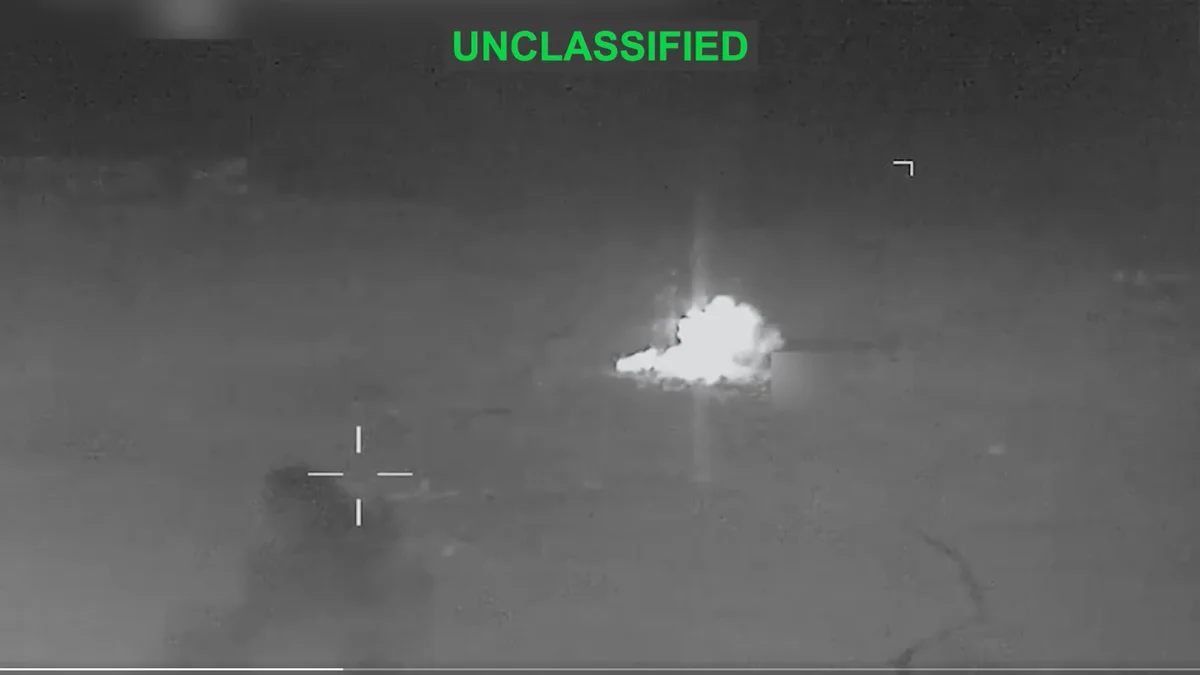
The United States has launched a new wave of airstrikes against Iran, targeting over 80 sites, in response to recent attacks on commercial vessels in the Strait of Hormuz, escalating tensions in the region. Bahrain and Kuwait have activated their air defenses in response to incoming missiles, allegedly fired by Iran's Revolutionary Guards.
Escalating Conflict in the Region
The Iranian military has vowed a "crushing response" to the US strikes, warning that Tehran will not tolerate interference in the management of the Strait of Hormuz. Iran's top joint military command, Khatam al-Anbiya Central Headquarters, stated that the only safe passage for commercial vessels through the waterway is the route determined by Iran.
Iran's Speaker of Parliament, Mohammad Baqer Qalibaf, accused the US of major violations of a Memorandum of Understanding (MOU), citing the recent airstrikes, renewed oil sanctions, and threats of further strikes. The US has revoked a license allowing Iran to sell oil following the attacks on tankers in the Strait of Hormuz.
Regional Reactions and Diplomatic Fallout
The Iranian Foreign Ministry has warned of retaliation against the US, stating that Tehran will take decisive measures to protect its interests and national security. Iranian President Pezeshkian has expressed gratitude to Iraq for honoring the late Supreme Leader Ayatollah Ali Khamenei and called for stronger cooperation between the two nations.
As the situation continues to unfold, US Defense Secretary Pete Hegseth is set to visit Israel on Wednesday, according to reports. The conflict in the region remains volatile, with the potential for further escalation. Key developments to watch include the response from Iran, the stance of other regional actors, and the impact on global energy supplies.
- Over 80 targets hit in US airstrikes against Iran
- Three tankers attacked in the Strait of Hormuz
- Iran's Revolutionary Guards claim to have targeted 85 US military sites in Bahrain and Kuwait