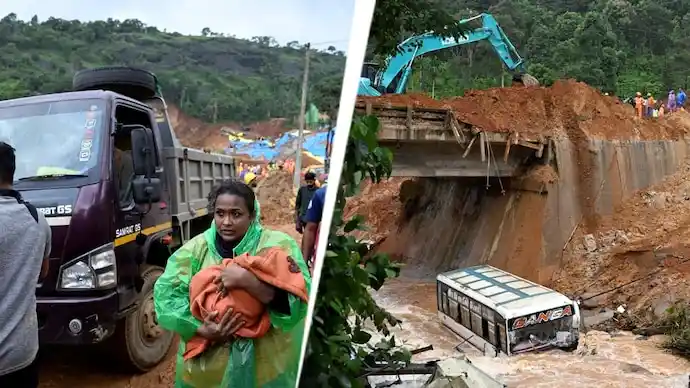
The Kerala government has termed the recent landslide in Wayanad a "man-made" disaster, attributing it to the unscientific excavation of soil during the construction of a tunnel project. The incident occurred on Tuesday near the Kalladi tunnel road construction site, resulting in three deaths and trapping several workers.
Wayanad Landslide: Heavy Rainfall and Construction Activities
Wayanad, a district in Kerala known for its ecological fragility, received heavy rainfall in the days leading up to the landslide, with 265 mm of rain recorded in the 24 hours prior to the incident. The Kozhikode-Wayanad tunnel project, being executed by Konkan Railway Corporation Ltd, was the site of the landslide.
The project, worth Rs 2,134 crore, involves the construction of an 8.17-km twin-tube tunnel and has been opposed by environmentalists due to its potential impact on the ecologically sensitive Western Ghats region. The Bhopal-based Dilip Buildcon firm was responsible for the tunnel work.
Government and Contractor's Response
Kerala Agriculture Minister T Siddique stated that the Konkan Railway Corporation was directed to remove the excavated soil on June 20, but it was dumped haphazardly at the construction site. Chief Minister VD Satheesan also held the project contractor liable for the landslide, citing the failure to comply with directions issued by the State Disaster Management Authority.
- Project cost: Rs 2,134 crore
- Tunnel length: 8.17 km
- Rainfall in 24 hours prior to landslide: 265 mm
Dilip Buildcon, the contractor, attributed the landslide to exceptionally heavy rainfall and the region's vulnerability to monsoon-induced landslides. The firm also pointed out that the project was being supervised by a Supreme Court-appointed central empowered committee.
Investigation and Accountability
A preliminary probe indicated that the soil excavated for the tunnel construction was piled on one side of the site, which was washed downhill following heavy rain, causing the landslide. The incident has sparked a blame game between the government and the contractor, with the central question of accountability remaining unanswered.