An analysis of Manipur’s Special Intensive Revision (SIR) of electoral rolls reveals that 64.2% of voter deletions occurred in the state’s 19 Scheduled Tribe (ST) constituencies, despite these areas representing only 37.8% of the electorate. The draft rolls, published on July 5, 2026, show 1.02 lakh deletions in tribal-dominated hill areas, compared to 56,850 in the remaining 41 constituencies, primarily in the Imphal Valley.
Disproportionate impact on tribal voters
The 19 ST constituencies, home to Kuki-Zo and Naga communities, saw deletion rates nearly double those of non-ST areas. Four constituencies in Churachandpur district—Henglep (25.9%), Singhat (24.8%), Saikot (21.2%), and Thanlon (27.2%)—recorded deletions exceeding 20%. Saikot alone accounted for 14,152 deletions, or 9% of the state’s total.
Twelve of the 19 ST constituencies contributed over half (51.7%) of all deletions, with reasons varying by region. In ST areas, 76.1% of deletions were marked as “Permanently Shifted or Absent,” compared to 53.9% in general constituencies. Deaths accounted for 18.9% of deletions in ST areas but 41.9% in general constituencies.
Conflict and electoral concerns
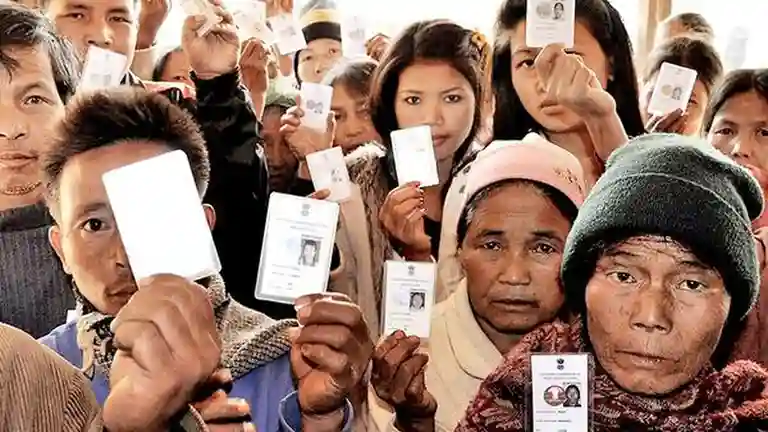
Manipur has faced ethnic violence since May 2023, displacing 60,000 people and killing over 250. The conflict, initially between Meitei and Kuki-Zo communities, has also strained Kuki-Naga relations. Civil society groups warn of potential disenfranchisement, citing displaced voters lacking documentation or access to relief camp enumeration forms.
Experts note urbanization and repeated conflicts may have contributed to the high deletion rates in tribal areas. The Election Commission of India (ECI) has not provided a breakdown of “shifted” versus “absent” voters, grouping them under a single category as in other states.
Next steps for affected voters
The Chief Electoral Officer of Manipur stated that eligible voters can be reinstated during the “Claims and Objections” phase by submitting Form 6 and a mandatory ECI declaration by August 4, 2026. The data was sourced from booth-wise deletion lists published by the CEO’s office.