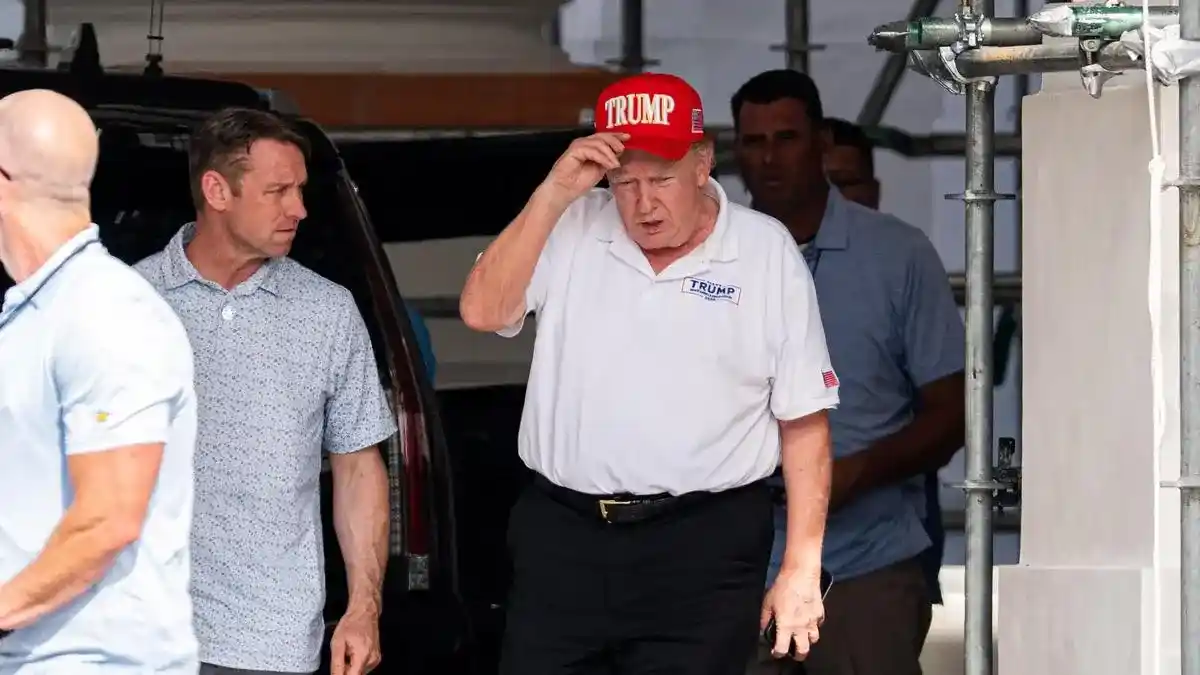
Donald Trump’s claim that 1,000 US missiles are “locked and loaded” for Iran—should it act on threats to assassinate him—raises immediate questions for investors: What’s the real market impact of a potential US-Iran escalation? The answer hinges on succession protocols, not automatic strikes. Under the 25th Amendment and the Presidential Succession Act of 1947, Vice President JD Vance would instantly assume command, with sole authority to execute or override any retaliation.
No "Dead Man’s Switch" for US Military Retaliation
Contrary to Trump’s implication, the US lacks a preauthorized “dead man’s switch” for automatic retaliation. As Garrett M. Graff, author of Raven Rock, notes, continuity-of-government plans—even Cold War-era nuclear protocols—require human authorization. Standing orders from Trump would carry no legal guarantee; Vance could act on them, ignore them, or choose a different response.
Iran’s threats are not hypothetical. Supreme Leader Mojtaba Khamenei vowed this week to avenge his father’s death in US-Israeli strikes, declaring retaliation “the will of our nation.” The White House has not clarified whether Trump’s orders would survive his assassination, but the Wall Street Journal reported fresh Iranian plots targeting the president.
Geopolitical Risk and Market Volatility
Trump’s public acknowledgment of personal threats from Iran—uncommon even for high-profile US leaders—adds a new layer of uncertainty. The US has previously warned Iran against targeting former officials, including John Bolton in 2022. Then, as now, the stakes for energy markets and defense contractors are high:
- Oil prices could surge if Iran follows through on threats to close the Strait of Hormuz, as it claimed this week after striking a vessel.
- Defense stocks (e.g., Lockheed Martin, Raytheon) may see short-term gains amid heightened tensions.
- US Treasury yields often rise during geopolitical crises as investors seek safe havens.
Security and Succession: The Vance Factor
Trump’s security concerns are not theoretical. He survived two assassination attempts in 2024 and recently opted for an older Air Force One jet, raising questions about the newer plane’s $400 million retrofitting—reportedly lacking advanced missile countermeasures. If Trump were killed, Vance’s decision-making would dictate market reactions. As Graff explains, nuclear launch authority would transfer to Vance, but Trump’s missile threat appears conventional.
For investors, the key takeaway is clarity: No automatic retaliation exists. The response—whether military or financial—would depend on Vance’s calculus, making his stance on Iran a critical variable for risk assessments.


