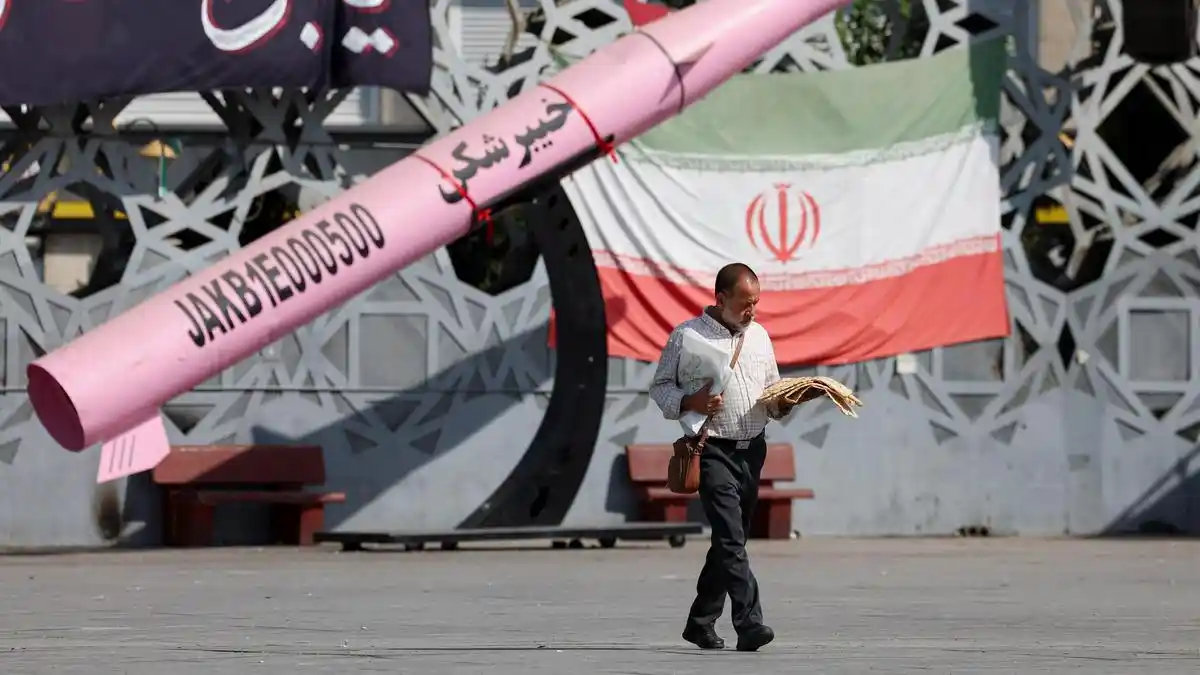
The U.S. military carried out another round of strikes against Iran overnight into Monday (July 13, 2026), targeting missile and air defense systems to curb attacks on commercial ships in the Strait of Hormuz. The action follows Iranian strikes on a container ship and a cycle of retaliation that has pushed peace talks to the brink.
Escalation in the Strait of Hormuz
Iranian forces fired projectiles at military targets on Qeshm Island, with no reported casualties, according to the island’s governor. Explosions were also heard in Bandar Abbas and Hajiabad. A U.S. official, speaking anonymously, confirmed strikes on Revolutionary Guard boats and defense systems to degrade Iran’s capacity to disrupt shipping.
The U.S. has launched three rounds of airstrikes in the past week, targeting sites linked to attacks on vessels using a route off Oman to avoid Iranian waters. President Donald Trump stated, “We bombed the hell out of them last night.” Semi-official Iranian reports confirmed one navy officer was killed.
Regional fallout and diplomatic strain
Iran retaliated by attacking Gulf Arab states hosting U.S. forces, insisting it must control the strait and may impose fees on passing vessels. Missile alerts sounded in Qatar, Bahrain, and Kuwait, with Qatar intercepting incoming fire and reporting three injuries from shrapnel. Kuwait reported damage to border posts and an oil platform, with one worker wounded.
Missiles also struck areas in Jordan, causing minor damage, while Oman reported drone strikes near the waterway a day after talks with Iran on strait access. Oman summoned Iran’s ambassador, calling the actions “irresponsible.”
The Strait of Hormuz, a critical route for global oil and gas, remains a flashpoint as U.S.-Iran negotiations near the midpoint of a 60-day interim deal. UN Secretary-General António Guterres warned that a return to full-scale hostilities would have “catastrophic consequences.”