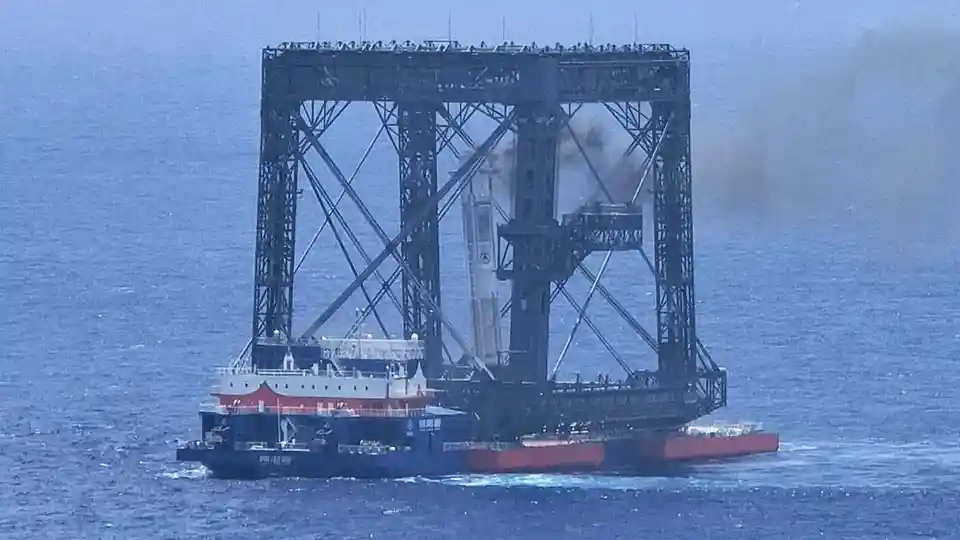
China has successfully recovered an orbital-class reusable rocket booster for the first time, a milestone that could significantly reduce launch costs and heighten competition with SpaceX in the commercial space race. The achievement follows a decade after SpaceX’s 2015 breakthrough in reusable booster technology.
Long March-10B’s Controlled Recovery: A Cost-Saving Breakthrough
The Long March-10B carrier rocket, launched from Hainan Province, delivered its payload to orbit before its first-stage booster was captured mid-air using a net-based sea platform. Unlike SpaceX’s ground or drone-ship landings, China’s approach relies on a recovery system that secures the booster post-descent. This method, though distinct, achieves the same economic goal: reusing high-value hardware to slash launch expenses.
Earlier attempts by China in December 2023 saw two reusable rockets fail during vertical landing tests, underscoring the technical hurdles of this capability. Friday’s success marks the country’s first controlled recovery of a first-stage booster, validating its reusable rocket program.
Technical Specifications of the Long March-10B
The Long March-10B is a liquid-fueled commercial rocket with the following specifications:
- Height: ~63 metres
- Diameter: 5 metres
- Lift-off thrust: ~890 tonnes
- Lift-off mass: ~760 tonnes
- Payload capacity (reusable config): 16 tonnes to low-Earth orbit
Market Implications: Why Investors Should Watch
Reusable rocket technology, pioneered by SpaceX, has already disrupted the launch market by lowering costs. China’s entry into this space—with a sea-based recovery system—could further pressure pricing and accelerate adoption of reusable launch vehicles. For investors, this signals a maturing competitive landscape in commercial spaceflight, where cost efficiency and reliability will dictate market share.


