China conducted a nuclear-powered submarine test of a long-range ballistic missile in the Pacific Ocean on Monday, prompting discussions between Indian Prime Minister Narendra Modi and Australian PM Anthony Albanese. The leaders expressed mutual concern over Beijing’s expanding military capabilities during a bilateral meeting in Melbourne on Thursday.
What Happened in China’s Missile Test?
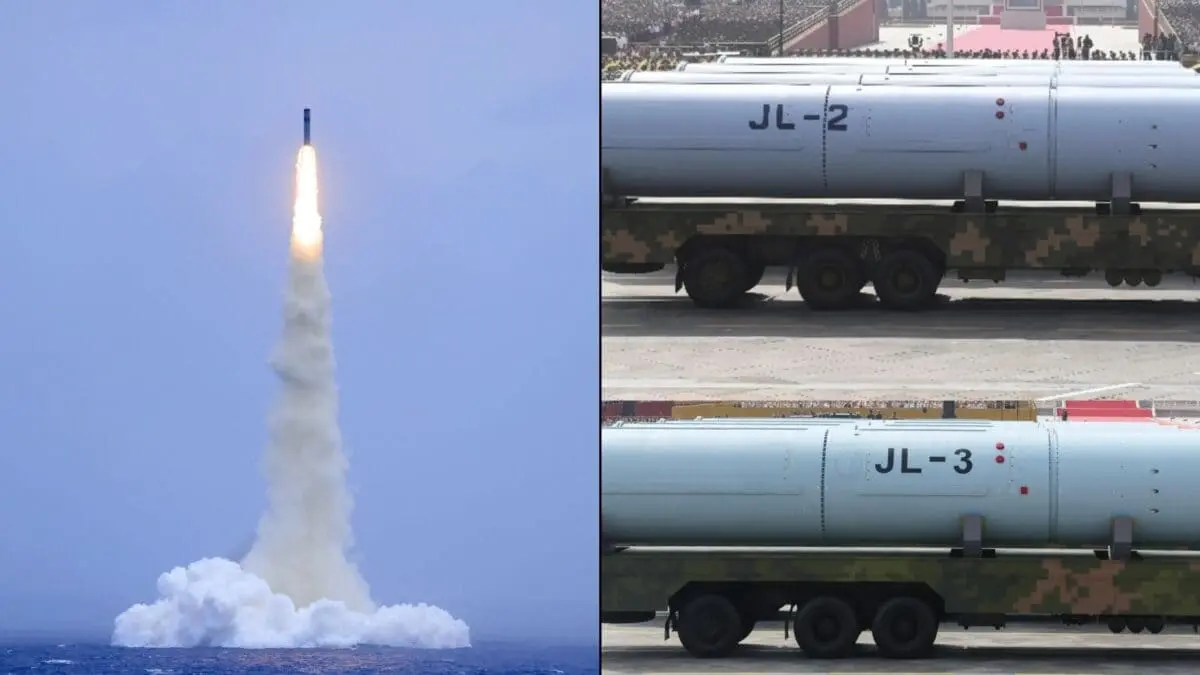
A Chinese strategic nuclear submarine test-fired a submarine-launched ballistic missile (SLBM), identified by Taiwanese authorities as a JL-2, into international waters. The missile, carrying an inert dummy warhead, traveled roughly 7,300 kilometers (4,350 miles) before splashing down near the Solomon Islands. Unlike typical underwater launches, this test occurred with the submarine surfaced.
This follows a 2022 land-based intercontinental ballistic missile (ICBM) test near French Polynesia, marking China’s first long-range Pacific launch in over 40 years. According to a Pentagon report, China operates six nuclear-powered ballistic missile submarines, each capable of carrying up to 12 strategic missiles.
Why Are Pacific Nations Alarmed?
Regional powers, including Australia, New Zealand, Japan, and the U.S., condemned the unannounced test. Australian Foreign Minister Penny Wong called it “destabilising to the region,” while Japan, given only hours of advance notice, voiced “serious concerns” over China’s opaque military activity.
Defence analysts note the test demonstrates China’s ability to target the U.S. from fortified naval positions. Lyle Morris of the Asia Society Policy Institute stated, “This indicates China is moving toward a more survivable and longer-range sea-based nuclear deterrent.” Emma Chanlett-Avery added that the launch signals China’s military strength to the U.S. and regional allies.
What’s Next for Indo-Pacific Stability?
Following their meeting, Modi and Albanese reaffirmed their commitment to peace and stability in the Indo-Pacific. Indian Foreign Secretary Vikram Misri confirmed ongoing cooperation between Australia and India to address shared security concerns.
Analysts warn that further unannounced tests could escalate tensions, particularly as China continues to expand its maritime defense posture. Regional powers are expected to intensify diplomatic and military coordination in response.