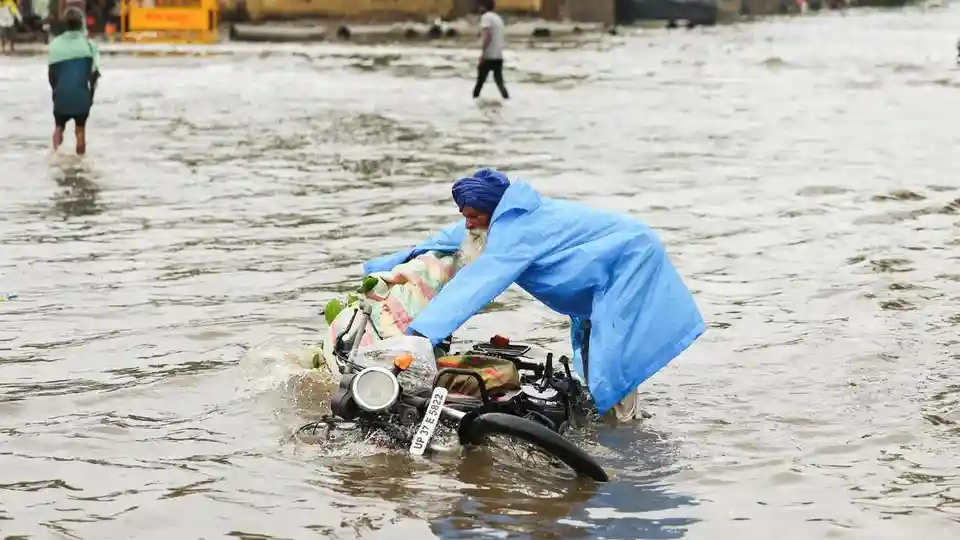
Delhi’s heavy monsoon downpour has disrupted business operations and commuter traffic, with widespread waterlogging and infrastructure damage estimated to cost the local economy millions in lost productivity. The India Meteorological Department (IMD) recorded 72.6 mm of rainfall at Safdarjung, Delhi’s base weather station, over 24 hours, with some areas receiving up to 160 mm.
Economic Fallout of Delhi’s Monsoon Deluge
Prolonged rainfall has paralyzed key commercial hubs, including Vikas Marg, New Delhi Railway Station, and the Delhi-Noida Expressway, where traffic crawled to a standstill. Businesses in waterlogged areas like Munirka and Dwarka reported delays in logistics and supply chains, while retail footfall in Sadar Bazar and Connaught Place plummeted. The Delhi Fire Service confirmed two uprooted trees on Raja Dhir Singh Marg, further exacerbating congestion near critical business districts.
Public infrastructure damage—such as a collapsed road segment in Jangpura—has compounded disruptions, with rescue operations diverting municipal resources from routine maintenance. Chief Minister Rekha Gupta’s deployment of PWD, MCD, and DJB teams has stabilized major roads, but secondary arteries remain clogged, affecting last-mile deliveries and service industries.
IMD Forecast and Market Implications
Weather experts attribute the persistent rain to a northward shift in the monsoon trough, with Delhi expected to face continued downpours until the system moves further toward the Himalayan foothills. The IMD’s projection of moderate to heavy rain with thunderstorms signals prolonged operational challenges for:
- Logistics and e-commerce firms facing delivery delays
- Retailers and hospitality businesses in flood-prone zones
- Construction and real estate projects halting due to site inundation
Analysts warn that if the rainfall extends beyond the weekend, Delhi’s GDP growth for Q2 could face a marginal downtick, particularly in trade and transportation sectors, which contribute ~18% to the city’s economic output.
Long-Term Infrastructure and Investment Risks
Recurrent monsoon disruptions highlight Delhi’s aging drainage systems, which struggle to cope with extreme weather events linked to climate change. Urban planners estimate that upgrading the city’s stormwater infrastructure could require investments exceeding ₹5,000 crore, presenting opportunities for construction firms and smart-city solution providers.
For investors, the episode underscores the need for climate-resilient urban development. Companies with exposure to Delhi’s infrastructure sector—such as Larsen & Toubro (NSE: LT) and IRB Infrastructure (NSE: IRB)—may see heightened demand for flood-mitigation projects, while insurers could face elevated claims from water-damaged properties.


