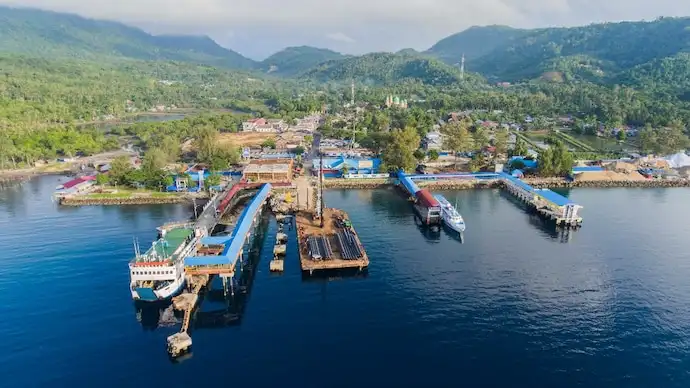
India and Indonesia have agreed to jointly develop the strategic Sabang Port on Weh Island, located at the northern tip of Sumatra and overlooking the Strait of Malacca, a critical waterway through which 40% of global trade passes.
Strategic Significance of Sabang Port
The Sabang Port deal is seen as a significant move by India to enhance its maritime presence in the Indo-Pacific region and counter China's growing influence. The port's location near the Strait of Malacca, a vital chokepoint for global trade, makes it a crucial asset for India's maritime strategy.
The Strait of Malacca is particularly important for China, with around 80% of its oil imports and a significant share of its trade flowing through these waters, creating a dependence that Beijing refers to as the "Malacca dilemma". By developing the Sabang Port, India will be able to establish a permanent footprint near this critical waterway.
Countering China's Maritime Expansion
China has been expanding its maritime presence in the Indian Ocean through its "String of Pearls" strategy, investing in commercial and military ports across the region. This has raised concerns for India, which sees China's growing influence as a threat to its own maritime interests.
- China has invested in deep-water ports like Gwadar in Pakistan and Lamu in Kenya.
- It has also constructed smaller terminals at Port Sudan.
- Many of these ports are strategically located, helping to safeguard China's energy imports and expand its influence in the Indian Ocean.
As India and Indonesia move forward with the Sabang Port development, the project is expected to enhance India's strategic position in the region and provide a counterbalance to China's growing maritime presence.