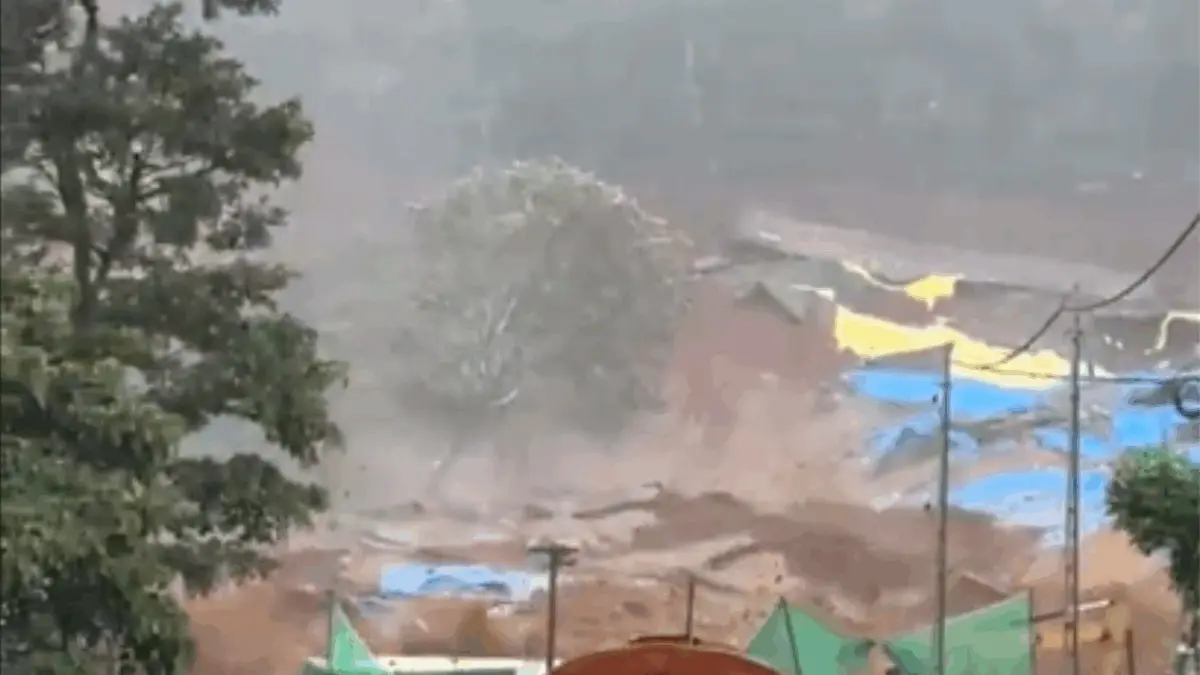
A devastating landslide struck the Kozhikode-Wayanad twin-tunnel project site in Kalladi, Kerala, highlighting the environmental risks associated with infrastructure development in the ecologically fragile Western Ghats region. The disaster occurred amid concerns over the region's vulnerability to catastrophic terrain failures.
Landslide Causes: Geology and Climate Factors
The Wayanad region's unique geology, characterized by a thick layer of laterite soil on top of hard granitic bedrock, makes it prone to landslides. During intense rainfall, water saturates the topsoil, increasing its weight and creating a high-pressure lubrication layer at the soil-rock interface, leading to hillside failures.
Climate change has altered Kerala's monsoon patterns, resulting in erratic and hyper-localised cloudbursts that over-saturate the fragile hillsides. The rapid warming of the Arabian Sea has destabilised the atmosphere, leading to deep cloud systems and intense rainfall events.
Human Intervention and Environmental Degradation
Historical deforestation and unscientific construction practices have exacerbated the region's vulnerability to landslides. The removal of native trees has led to soil piping, where rainwater channels through decayed root systems, eroding the hill internally and triggering sudden collapses.
The expansion of tourism, road widening projects, and infrastructure installations have modified the natural landscape, creating unstable slopes and increasing the risk of disasters. Poor management of excavated soil and construction debris has further trapped water, adding to the pressure on surrounding hills.
- The region's slopes often exceed 20 degrees, making gravity an aggressive force.
- Native tree removal has led to soil piping and increased landslide risk.
- Poor construction practices have modified the natural landscape, creating unstable slopes.
As the region continues to grapple with the aftermath of the landslide, concerns remain over the long-term impact of infrastructure development on the fragile ecosystem. Authorities are likely to face scrutiny over their environmental assessment and mitigation measures for future projects.