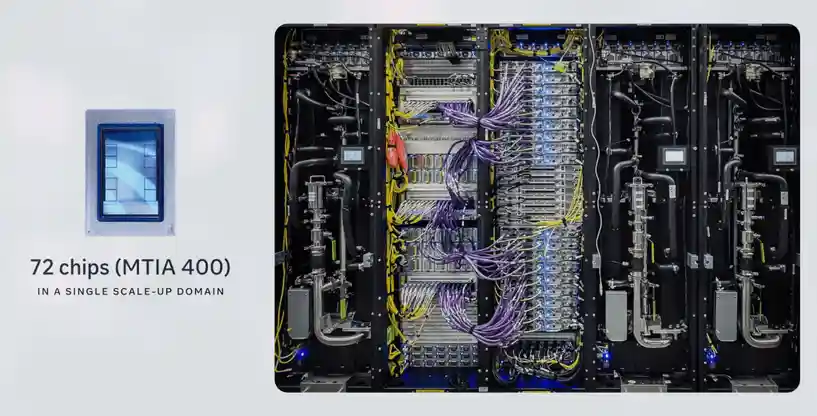
Meta is set to begin manufacturing its latest custom AI chips in September, a move designed to slash its reliance on expensive GPUs from Nvidia and AMD amid a global component shortage. The first of these chips completed testing in just six weeks, according to an internal memo obtained by Reuters.
How Meta’s MTIA chips will work and why they matter
Developed under Meta’s Meta Training and Inference Accelerator (MTIA) program, these chips are tailored for AI tasks like training recommendation algorithms and running inference for its apps. Think of them as specialized engines built to handle the heavy lifting of AI—faster and more efficiently than general-purpose chips.
The company is taking a modular approach, using "chiplets" that can be updated as AI demands evolve. This flexibility lets Meta adapt without starting from scratch each time. Partners include Broadcom for design, TSMC for manufacturing, Samsung for RAM, Sandisk for storage, and Sumitomo Electric for fiber optic equipment.
Meta’s broader AI infrastructure push
These chips are part of Meta’s aggressive push to secure computing power for its AI ambitions. The company expects to spend between $125 billion and $145 billion this year on capital expenditures, much of it earmarked for AI. It’s also deploying 7 gigawatts of compute capacity in 2025, with plans to double that next year.
Meta isn’t going all-in on its own hardware, though. It still plans to buy GPUs from Nvidia and AMD, and has struck deals with ARM, AMD, and Amazon for additional compute power. The MTIA chips will complement these purchases, not replace them entirely.
A growing trend: Big Tech builds its own AI chips
Meta isn’t alone in this shift. OpenAI is developing an inference processor with Broadcom, while Anthropic is reportedly exploring custom chips with Samsung. Amazon and Google already design their own AI chips, and a wave of startups is entering the space to meet soaring demand.
For everyday users, this could mean faster, more personalized AI features in Meta’s apps—though the biggest immediate impact will be on Meta’s bottom line as it reduces its GPU spending.


