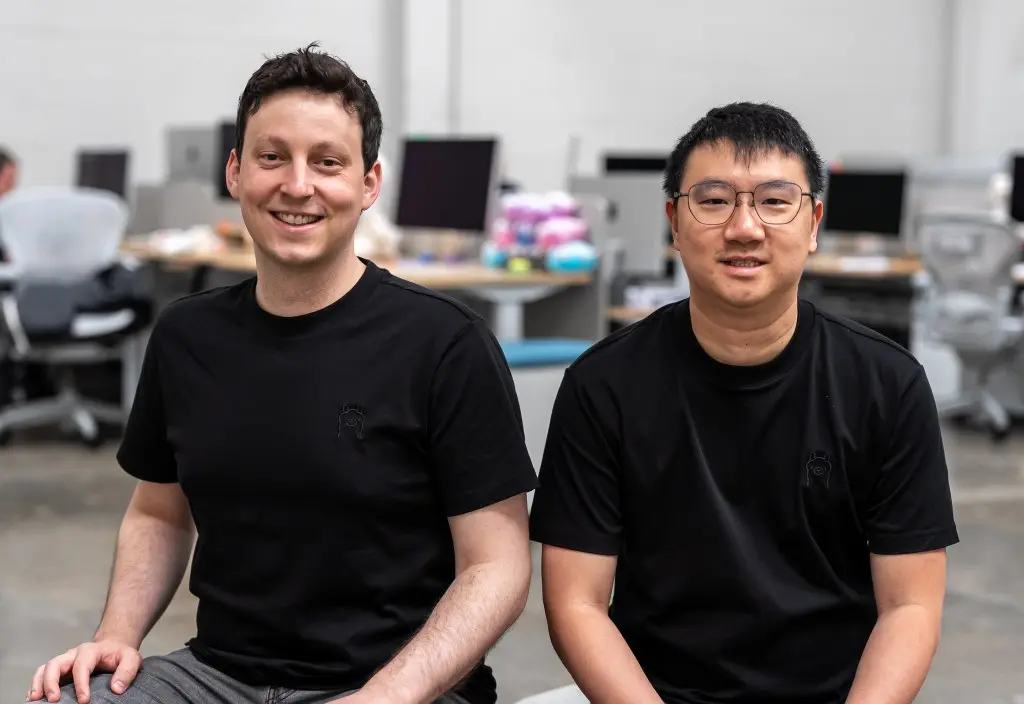
Ollama has raised $65 million in Series B funding to expand its open-source AI platform, which lets developers run advanced AI models locally on their own machines. The company now serves nearly 9 million monthly users, including 85% of the Fortune 500.
How Ollama makes AI models accessible to developers
Founded in 2023 by Docker Desktop veterans Jeff Morgan and Michael Chiang, Ollama simplifies running open-weight AI models on PCs. Unlike early AI tools designed for researchers, Ollama gets models up and running in minutes, eliminating complex setup barriers. Its GitHub repository has earned 176,000 stars and nearly 17,000 forks, reflecting strong developer adoption.
For larger models that exceed local hardware limits, Ollama offers a cloud service with tiered pricing from free to $100/month. Unlike competitors that charge by token usage, Ollama bills based on GPU time, providing more predictable costs for businesses.
Why investors bet big on Ollama’s open AI approach
The Series B round, led by Theory Venture, follows a $15 million Series A from Benchmark. Total funding now reaches $88 million. Investors see Ollama as the Docker of AI—a platform that abstracts away infrastructure headaches, just as Docker did for cloud containers.
Benchmark’s Peter Fenton, who led the Series A, highlights the founders’ track record: “What Jeff and Michael built with Docker is used by over 10 million developers daily. Their ability to create ubiquitous developer tools is rare.” The team’s lean structure—just 14 employees—contrasts with its massive impact.
Open vs. closed AI: The shifting enterprise landscape
Ollama’s growth accelerated in early 2024 as open models like OpenClaw demonstrated new capabilities in coding and agentic tasks. Enterprises are increasingly adopting open models for cost-effective daily use, reserving closed models like Anthropic’s for specialized needs.
While some critics argue Ollama’s cloud pivot “enshittifies” its free tool, Morgan frames it as an evolution: “State-of-the-art models are often too large for local hardware. Our cloud service helps bridge that gap.” Fenton adds that the core free product remains unchanged, preserving its mission of easy model discovery and local execution.
Looking ahead, Ollama’s funding will likely fuel further cloud expansion and model optimization. As open AI adoption grows, the company is positioned to shape how developers and businesses interact with AI—proving that open-source tools can scale into sustainable businesses.


