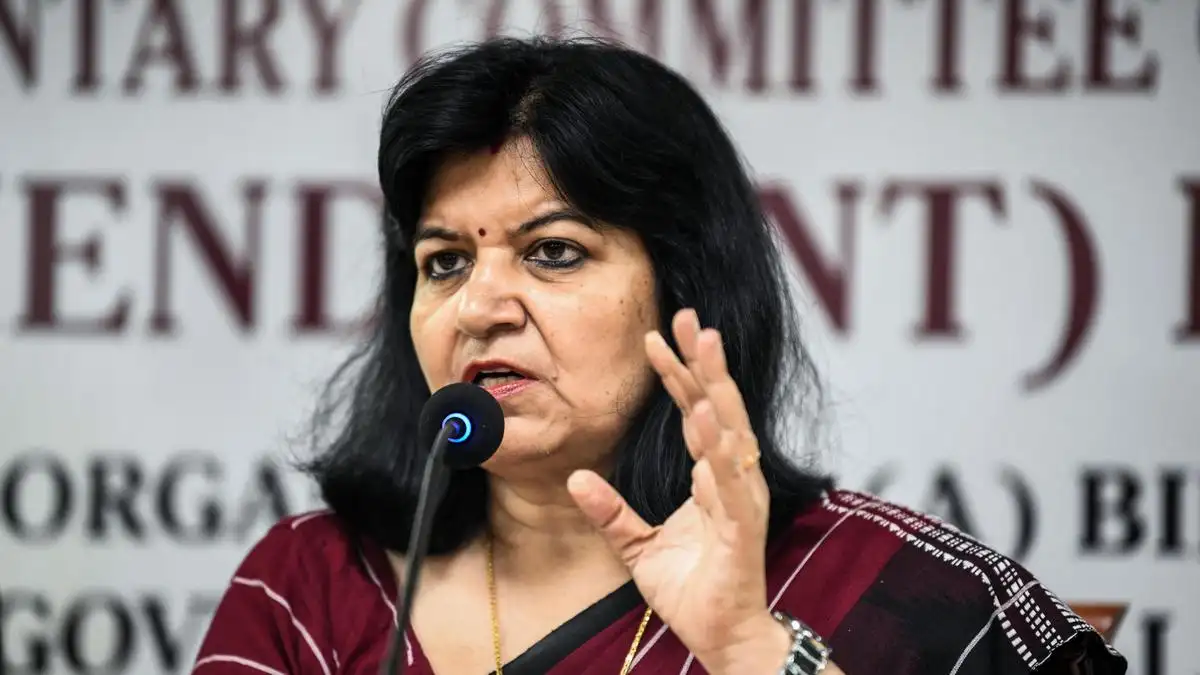
A Joint Parliamentary Committee has recommended replacing the automatic removal of a Prime Minister, Chief Minister, or Minister after 30 days in judicial custody with suspension, though both would require the official to step down. The panel, led by BJP MP Aparajita Sarangi, reviewed the Constitution (One Hundred and Thirtieth Amendment) Bill, which aims to address gaps in cases where public functionaries remain in office during prolonged incarceration.
Key Recommendations in the Bill
The committee proposed five changes, including replacing terms like “removed” or “shall cease to be a Minister” with “suspension,” as the latter is seen as reversible and less stigmatizing. It also recommended:
- Defining “serious criminal offences” as those punishable by five or more years in prison.
- An automatic reversal clause for suspension upon discharge, acquittal, or prosecution failure.
- Fast-track courts for cases involving high constitutional functionaries.
- A separate schedule listing offences covered by the provisions.
Stakeholder Concerns and Disagreements
While most stakeholders agreed on the need for clarity in the Constitution and the Representation of the People Act, 1951, disagreements centered on the Bill’s mechanism. The most contested provision was the automatic removal after 30 days in custody for offences punishable by five or more years, which critics argued treated unproven accusations as de facto disqualifications.
Several institutions, including NALSAR Hyderabad and the Association for Democratic Reforms, proposed shifting the trigger to the framing of charges by a court. Others raised concerns about the five-year threshold, calling it inconsistent with other laws using a seven-year standard. The panel did not adopt this change but recommended a separate schedule of offences.
Potential Misuse and Next Steps
A majority of academic and civil society stakeholders warned the provision could be misused against Opposition-ruled states, particularly under stringent bail laws like the Prevention of Money Laundering Act. The committee did not address this concern in its recommendations.
The draft report notes that even supporters of the Bill’s objective criticized its current formulation, while opponents did not reject the legislative goal itself. The panel’s recommendations now await further action.